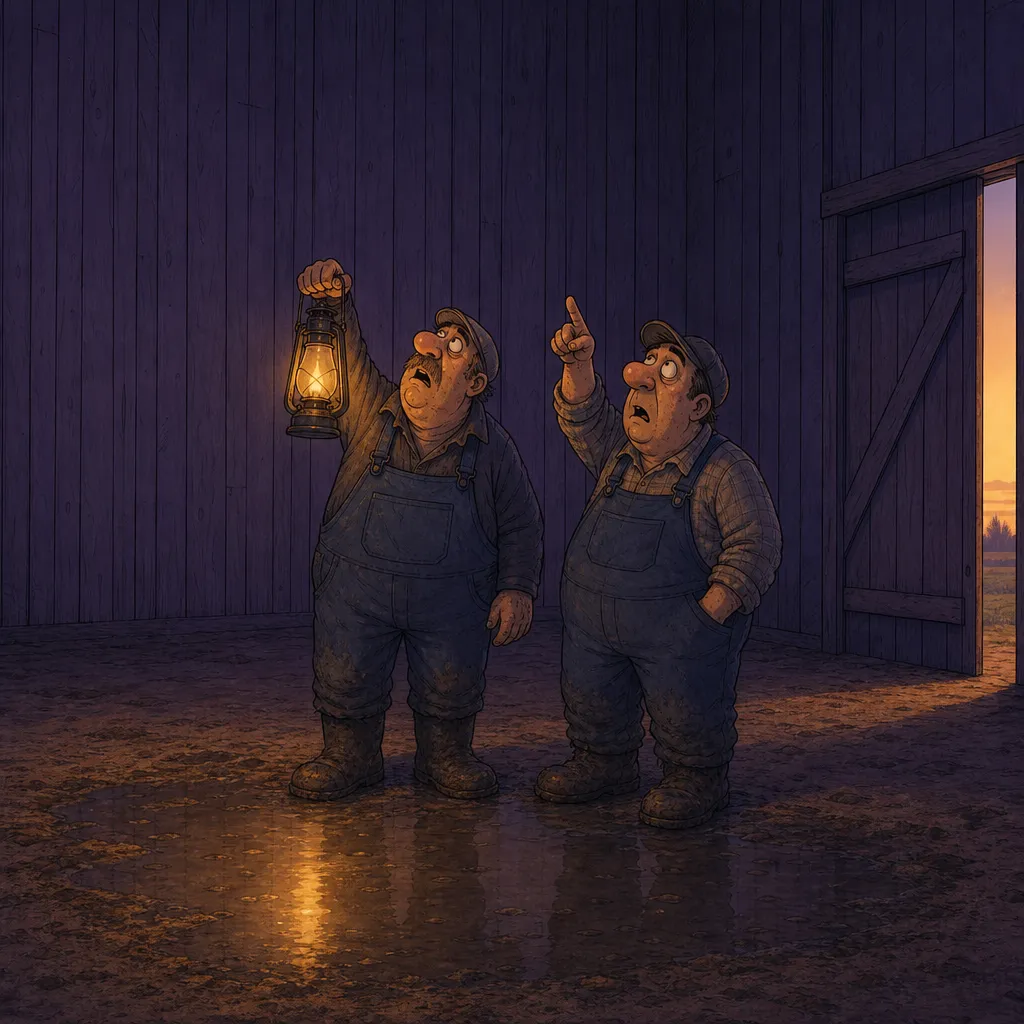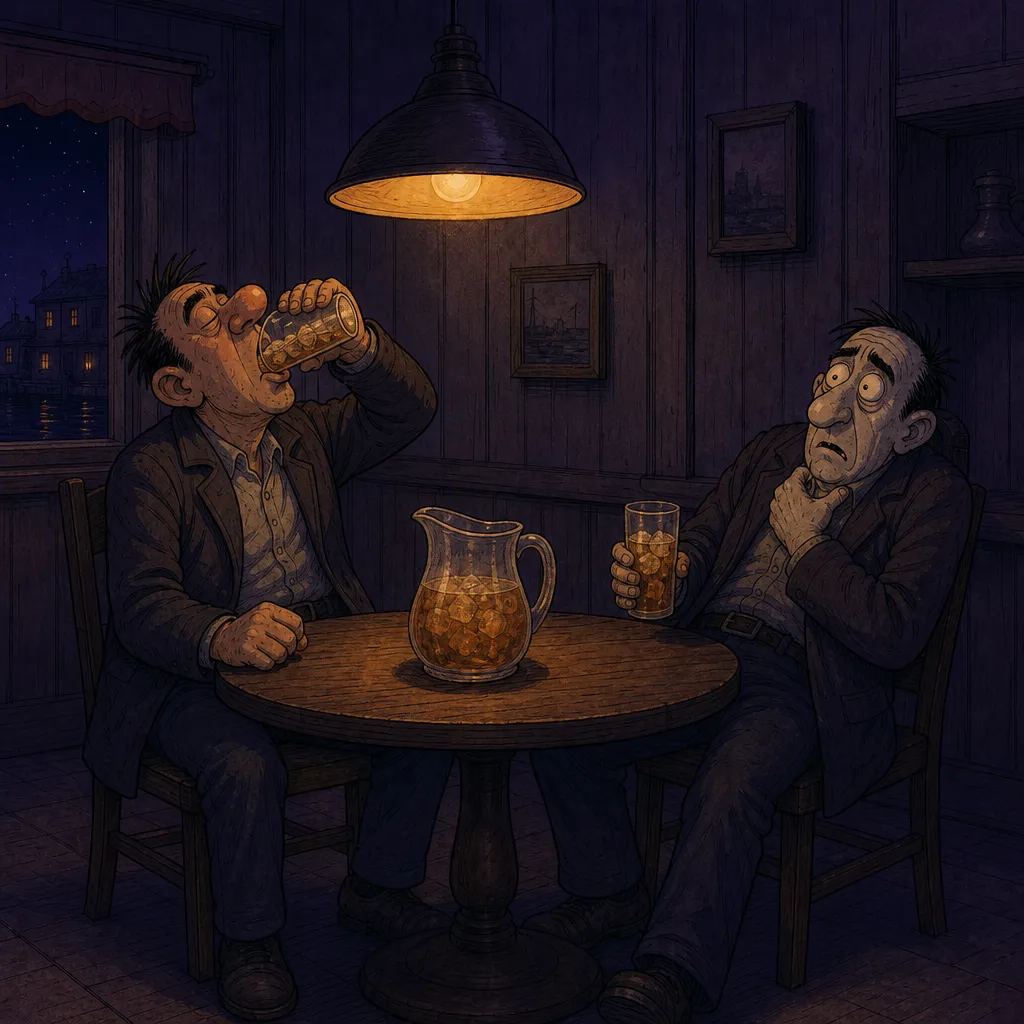
A short scene that doesn’t add up, one person who knows the truth, and questions they answer only with yes, no or irrelevant. That’s a situation puzzle. The genre goes by different names depending on where and when you met it. Here is how it works, how it differs from an ordinary riddle, and the history we can trace, with sources.
In this article
A scene, a secret, closed questions
The statement sets up a paradox: true facts that seem impossible together. A man orders soup at a seaside restaurant, swallows one spoonful, walks out and kills himself. Why? None of it is false. What’s missing is the link that would make the scene make sense.
That link is the solution. One person knows it, and everyone else rebuilds it by asking closed questions. The game ends when the investigators can tell the story and explain every odd detail in the scene. There’s nothing to calculate and no formal logic trap, only assumptions to undo.
On this site
Not a riddle, not a whodunit
A classic riddle is one question you solve on your own, often through wordplay, and the answer is a word. A situation puzzle is solved in conversation, and the answer is a story. It isn’t a pocket whodunit either. Nobody hands you clues to sort through; you go and get them yourself, one question at a time.
People often ask what happens when another explanation fits the statement. It does happen. But the story that counts is the one the host has in mind, and a version that drifts from it will run into a “no” somewhere once you test it. A well-written puzzle keeps those detours short: every detail in the statement is there for a reason, and the solution accounts for all of them.
On this site
One genre, many names
What you call it depends on where you first came across it. It isn’t Twenty Questions, though, even if both run on yes and no. There you guess a thing. Here you rebuild a story.
- Situation puzzle: the plain descriptive name, and the one closest to the French énigme de situation.
- Lateral thinking puzzle: the name on the English-language puzzle books, which puts the stress on how you reason.
- Dark riddles, black stories: the macabre branch of the genre.
- Turtle soup: ウミガメのスープ in Japan, 海龟汤 in China, named after the most famous of these stories.
- Yes/no riddles: named after the mechanic, and often what friends call it at the table.
Lateral thinking
The phrase is Edward de Bono’s. In his 1967 book The Use of Lateral Thinking, he used it for reasoning that changes its starting point instead of pushing step by step down the same path. De Bono was writing about creativity and problem solving, not party games.
Puzzle writers took the word and ran with it. Paul Sloane’s Lateral Thinking Puzzlers, published by Sterling in 1992, invokes de Bono right in its description. The book sorts nearly a hundred scenes by difficulty, with clues and answers. Sloane went on to write a string of collections with Des MacHale.
Turtle soup, from Japan to China
In October 2004, the Japanese publisher X-Knowledge brought out a translation of Sloane and MacHale titled ポール・スローンのウミガメのスープ, “Paul Sloane’s Sea Turtle Soup”. Its description opens on the restaurant scene. The title became the name of a series of books, and in Japan the name is often used for the whole genre.
In Chinese the game is 海龟汤, and the vocabulary follows the metaphor. The statement players see is the 汤面, the surface of the soup. The hidden truth is the 汤底, what sits at the bottom of the bowl. Whoever runs the game answers yes, no or irrelevant.
Our library has its own take on the restaurant scene, Albatross Soup. The statement is on the site, without the answer.
Sources
- ポール・スローンのウミガメのスープ (X-Knowledge) (checked )
- The ウミガメのスープ series at the National Diet Library (checked )
- About Tanghenre (汤很热) (checked )
Black stories, the dark branch
Also in 2004, in Germany, Holger Bösch created black stories, published by moses. Verlag. Each set holds 50 morbid stories. A game master reads the scene, knows the solution and answers the others’ questions with yes or no. The series has since grown into many editions, an English one among them.
Black stories gave the genre an openly macabre tone: nearly every scene hides a death. A situation puzzle doesn’t need a body, but the macabre suits it. It makes an ordinary detail unsettling, and it steers players towards the wrong assumptions very efficiently. In English you’ll often see these called dark riddles.
Sources
- black stories (moses. Verlag) (checked )
Why it still works
The game needs nothing: no board, no dice, sometimes not even paper. Just someone who knows a story. That’s what lets it travel from a book to a dinner table, and from one language to the next.
And the fun is in the question, not the answer. You don’t win by knowing things. You win by noticing what you assumed without reading it. When the solution lands, it feels obvious. That’s how you know the riddle was fair.
Where Post Mortem fits
Post Mortem keeps the form as it is: a scene, a hidden solution, three possible answers. Our riddles are written in French and in English, each language on its own terms. In the app, on iPhone and Android, the narrator answers your questions, so you can play alone. On the site, the library has the free statements and their artwork, without the answers.
To start, read the rules, or try a classic: the man who lives on the 12th floor and gets off at the 8th. If you’re torn between a game night with friends and a solo investigation, our guide to where to play will help you pick.