Search for road trip riddles and you mostly get one-liners with the answer printed underneath, each good for ten seconds of road. A situation puzzle is something else. One passenger knows a short, dark story. Everyone else, driver included, asks yes-or-no questions until the car has worked out what happened. One story can fill twenty minutes of motorway, with nothing to look at and nothing to hold. Here is how to run it from the passenger seat.
In this article
Why it works in a car
The game is all talk. No board, no cards, no screen to pass around, so the driver plays like everyone else: listening and asking questions is all it takes. Nothing has to be seen, which is rare for a game.
It also survives a journey. A story can stop for a toll, a fuel stop or a missed exit and pick up where it left off, because the only thing to keep is what has been established. And there are no teams and no score. The whole car is on the same side, against the story.
On this site
Who does what
The front passenger is the narrator. They know the truth, read the scene aloud and answer yes, no or irrelevant. Everyone else asks the questions, the driver too.
The driver reads nothing and touches no phone. If they want to hear the scene again, the narrator reads it again. On a long drive, swap narrators at each stop, but only among passengers: whoever is at the wheel is always a guesser.
In a car of two it still works: the passenger tells, the driver investigates.
Before you leave
The narrator has to know the answers, and no riddle on this site shows its solution: it lives in the app. A solution opens once its case is closed, by your own questions or with clues, which open its facts one at a time. So the narrator prepares at home, the evening before. Three or four stories are plenty for a day’s drive.
There is a second reason to do it before you set off. The app’s narrator needs a connection to answer. A case you have already closed does not: its solution is on your phone, and you can read it in a tunnel or at the bottom of a valley with no signal.
Last, note down for each story the three or four facts the car has to find. A list can be checked at a glance, which matters if reading in a car makes you queasy.
On the road
Read the scene twice, slowly, and say when you have finished. There is no table to leave the text on, so the car has to hold it in its head. Read it again, word for word, whenever someone asks.
Give the job of memory to someone in the back. Every ten questions or so, they say what is established: “he was alone, it was night, the car matters”. In a car nobody can see anybody’s face, so that recap is also how the narrator finds out who has dropped off.
One question at a time, and the driver’s goes first when two come together. When the road needs the driver’s full attention, the game stops. It will keep.
Do not hurry the ending. A story left open at a rest stop is good company for the next hour.
Which stories to take
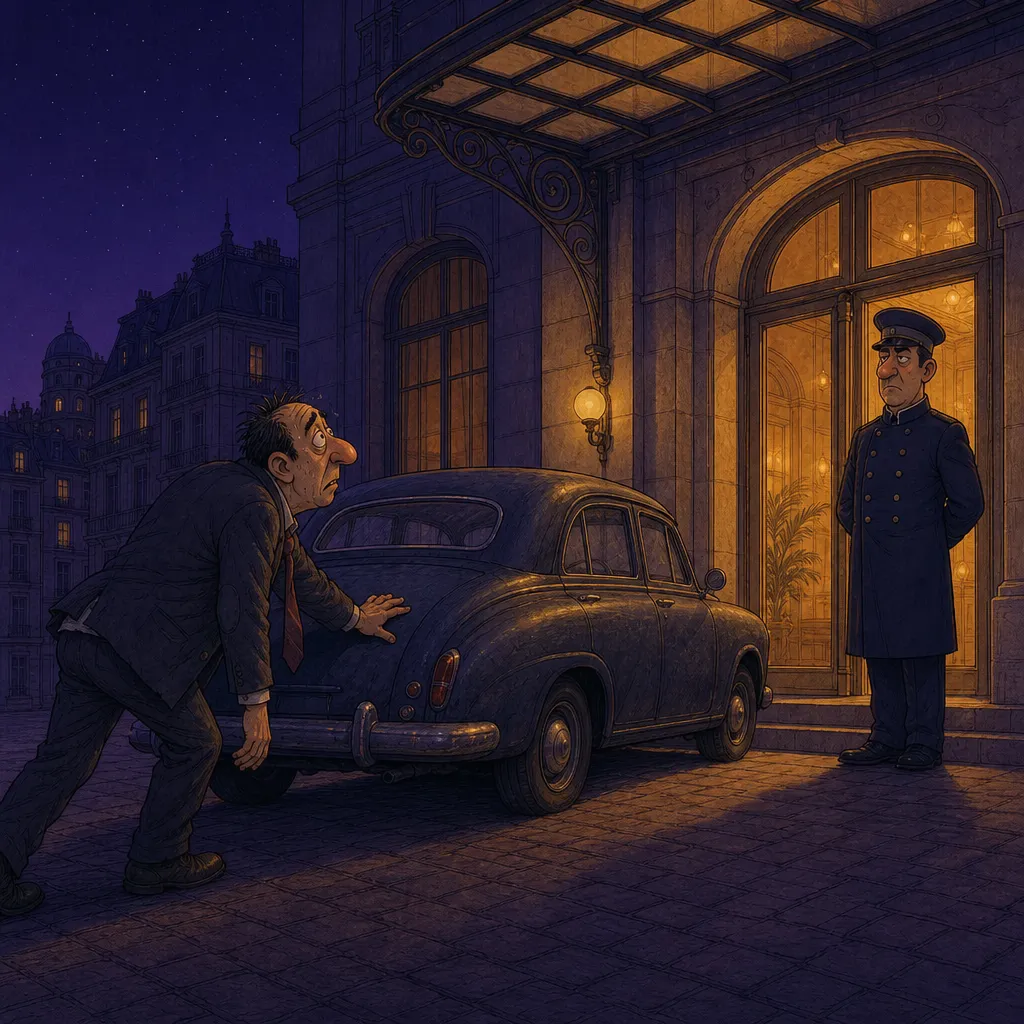
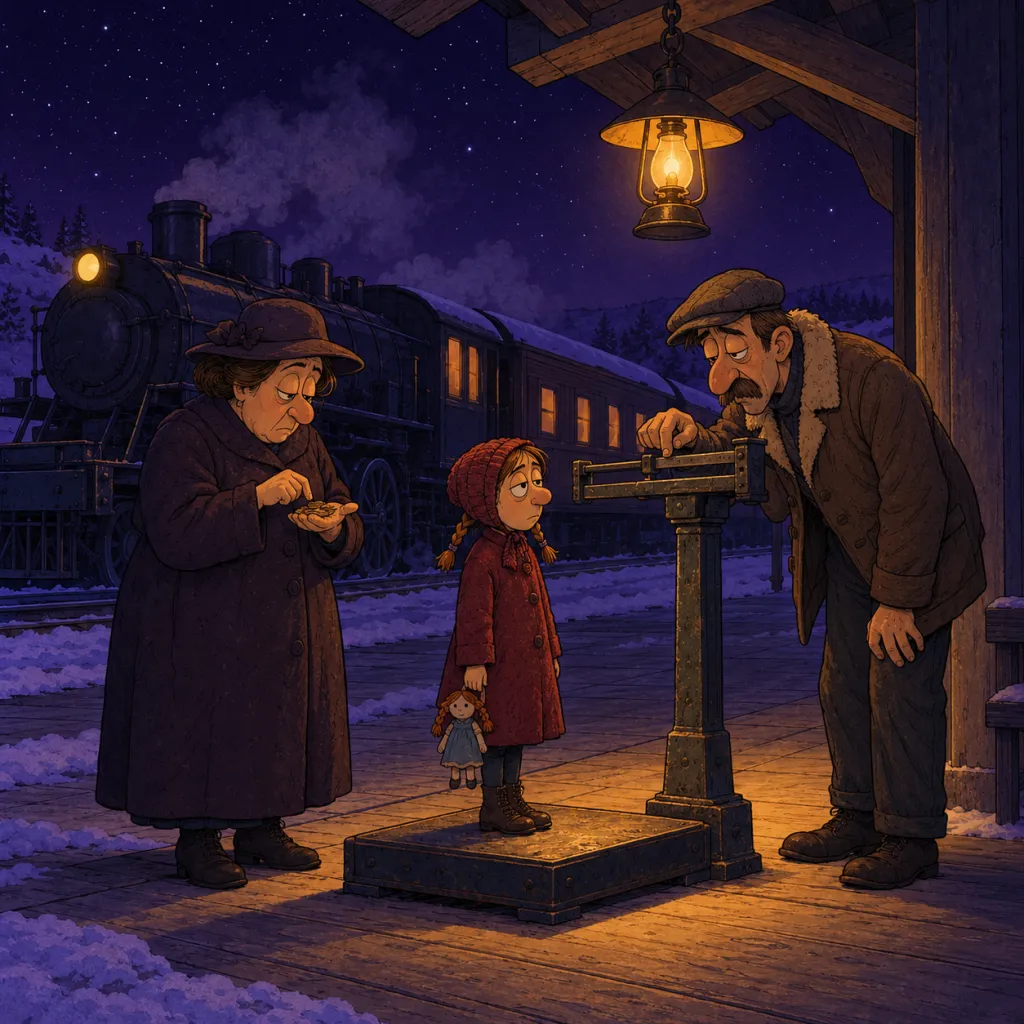
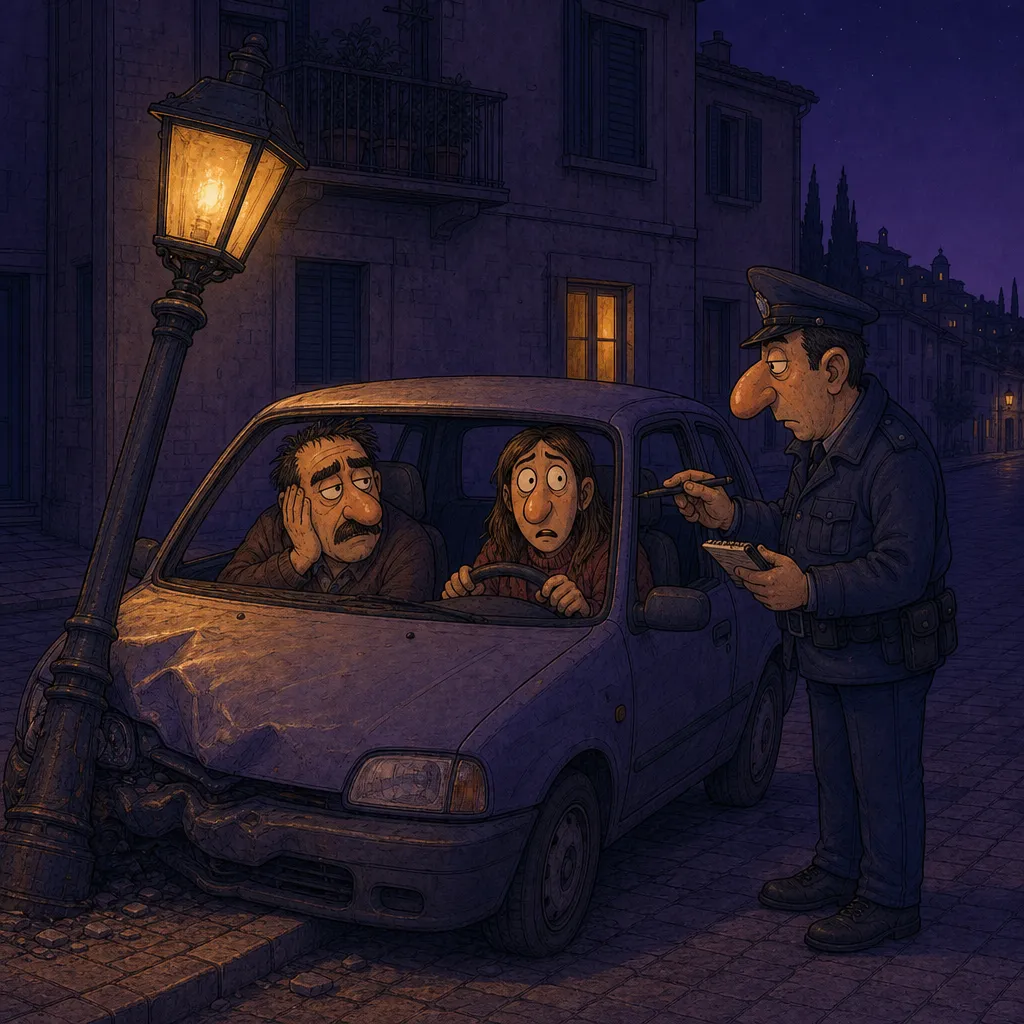
Take short scenes, the kind you can repeat after hearing them twice, and start on one star. Stories about journeys suit the occasion. For the first hour, take the three one-star stories at the bottom of this page: a car pushed up to a hotel, a fine for the wrong person, and a little girl on a train with no ticket.
Once the car has the hang of it, these take more questions. All of them are free to read on this site:
- The Stranger in the Car, two stars: a man walks off for gas and leaves his wife locked in the car. He comes back to find her dead, the doors still locked, and a stranger inside.
- Tracks to the Door, two stars: a man shot dead in his parked car. In the mud, tire tracks lead to the driver’s door and back, and there are no footprints.
- One Savage Blow, two stars: a man steadies himself on a pole to shake a pebble out of his sandal. A passerby runs up and breaks his arm. The man is forever grateful.
- Checked Twice, two stars: Canada, 1983. A new airliner’s fuel gauges are broken, so the fuel is measured by hand, then checked again at the stopover. Halfway there, the tanks run dry.
- The Smoking Carriage, three stars: a non-smoker takes the train home from Switzerland. The only free seat is in a smoking carriage. In a non-smoking carriage, he would be dead.
Dark, not gory: think about who is on board
These are dark riddles, written for adults, and most of them start with a death. Nobody can walk out of a moving car, so choose with your passengers in mind. With teenagers in the back, read the statement and the solution before you choose, or take a scene where nobody dies in the statement, such as “The Car and the Hotel” or “Fifty-Three Cents”.
Some people would also rather not hear about breakdowns and accidents while they are on the road. Ask before you read.
In our riddles the death sets the scene and is never walked through. The chill comes from a scene that will not explain itself, not from blood.
Driving alone?
Then this is not a game for the road. Playing alone means typing your questions to the app’s narrator, and a phone has no place in a driver’s hand. Keep it for the passenger seat, the train or the ferry: there, the narrator answers yes, no or irrelevant, and you can investigate on your own for as long as you have a signal.