Search for Halloween riddles and you mostly get “what am I?” one-liners with the answer printed underneath. Each one lasts about ten seconds. A dark riddle told with the lights down can last twenty minutes: it’s a situation puzzle, where one person knows what happened and everyone else asks yes-or-no questions until they work it out. Three of them fill a party. Here’s how to run it.
In this article
Why it works at a Halloween party
Nothing to buy or set up, and everyone is on the same side. Best of all, it copes with people drifting in, which at a party they always do: someone who arrives on question twelve gets a quick recap and asks question thirteen. Three possible answers take one sentence to explain.
On this site
Before anyone arrives
Pick one or two narrators, no more, and give each of them one story to prepare on their own, a few days ahead. No riddle on this site shows its solution: it lives in the app, and the hosting guide covers how to get to it and what to note down.
Then plan the running order. Three stories make a good night:
- An opener, easy, one star. It teaches the game to anyone who hasn’t played, and it should land before attention drifts.
- A harder one in the middle, once the room has learnt how to ask and actually wants to dig.
- A closer, medium difficulty, picked for its ending. It’s the one people will still be talking about while you clear the glasses.
Setting the room
Lights down, but not so far that you lose people’s faces. Half the game is in reactions: the narrator pausing a beat too long, the person next to you who has just got it. A lamp, a few candles, music off or very low while a story is running.
One voice reads the statement, slowly, twice. After that, keep the exact words where everyone can see them: every free riddle has its own page on this site with no answer, so put it up on a phone in the middle of the table or on the TV. The narrator’s phone stays face down.
During the night
One question at a time: when two land together, the narrator takes the first. And a recap out loud every ten questions or so, because a room with a few drinks in it forgets its own answers fast.
Swap narrators after every story, and take a proper break between them, long enough to top up the drinks and let whoever cracked it explain how. Then stop while people still want another. A fourth story at one in the morning, with half the room on their phones, spoils the memory of the first three.
We play without points. A room keeping score gets shy about silly questions, and silly questions crack more stories than you’d think.
Dark, not gory: think about who’s at the table
These stories are about death. That’s the genre, and on Halloween it’s half the point. But if a guest is living through an accident, an illness or a loss close to the story you planned, choose another one. Nobody needs to know why you switched.
In our riddles the death sets the scene and is never walked through, and the artwork is macabre, never gory. The chill comes from a scene that won’t explain itself, not from blood.
Our Halloween collection
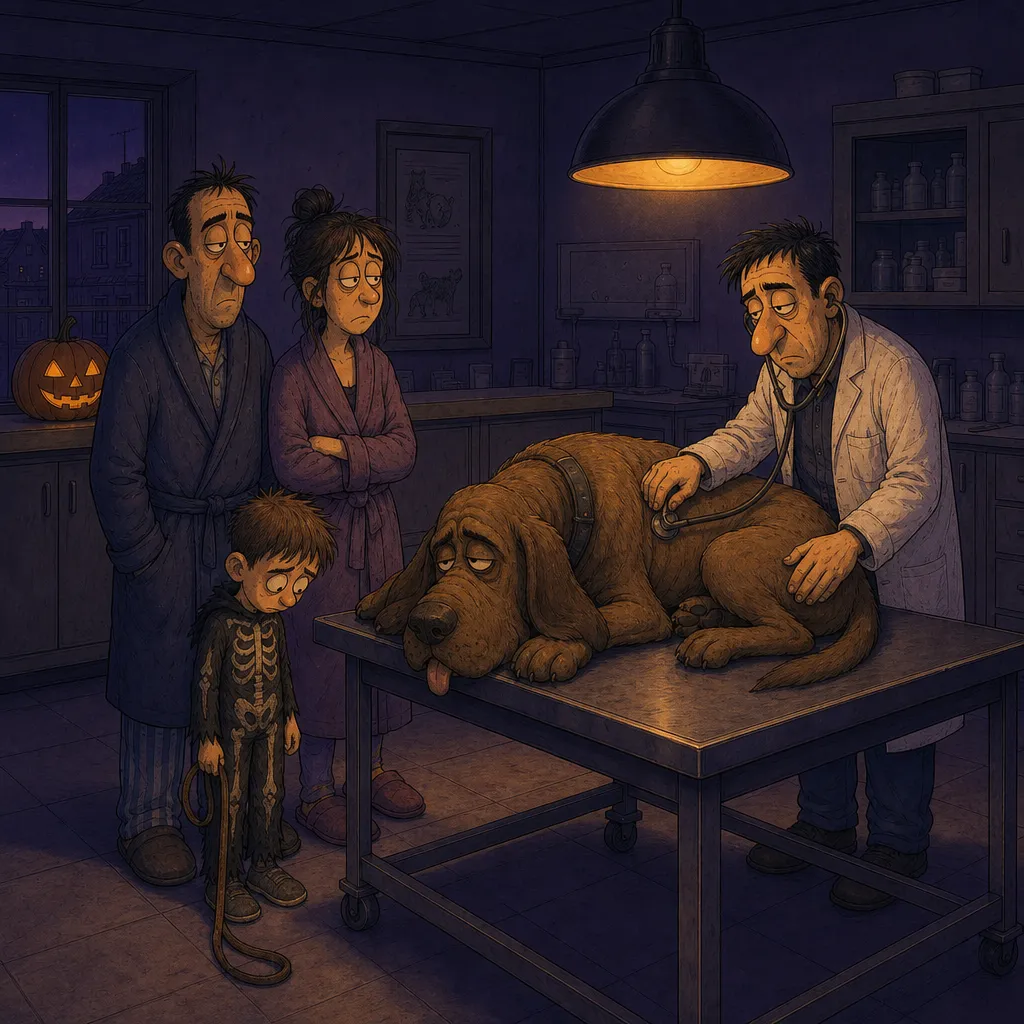
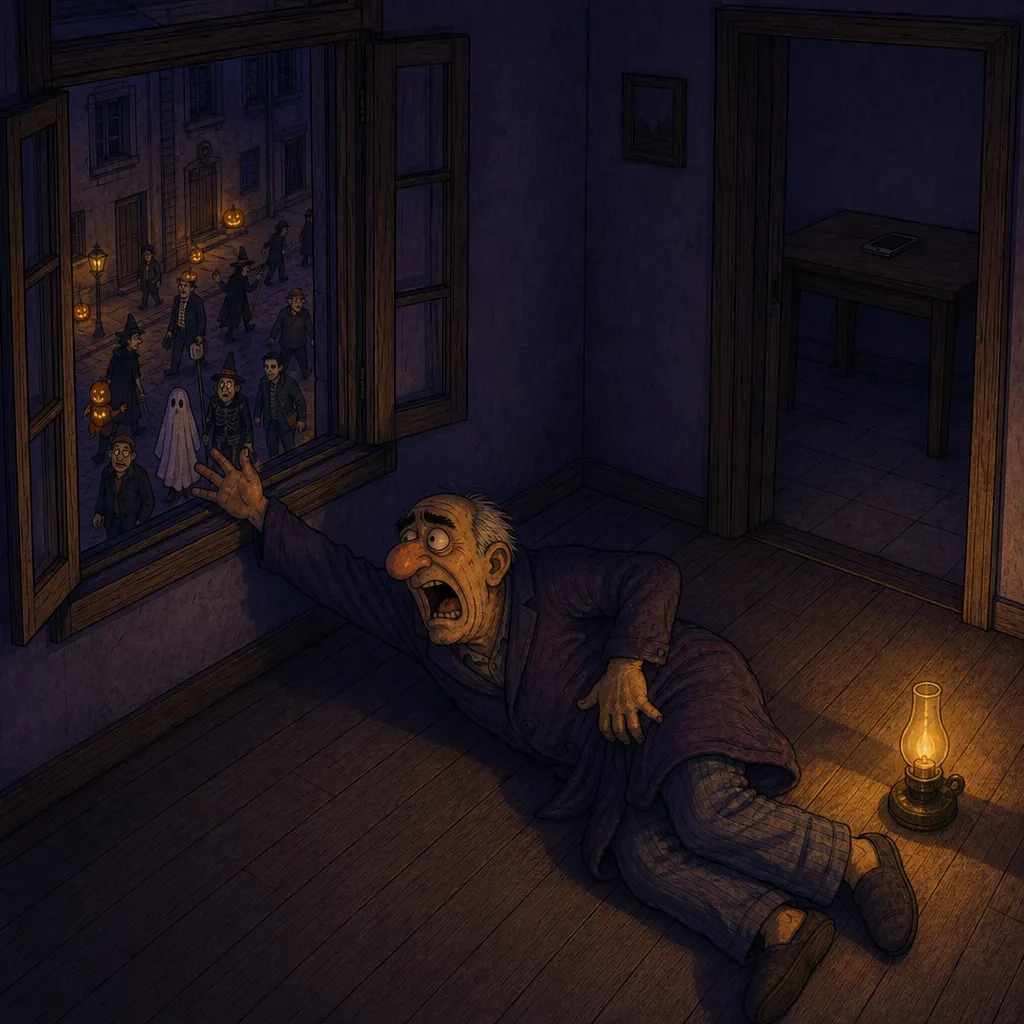
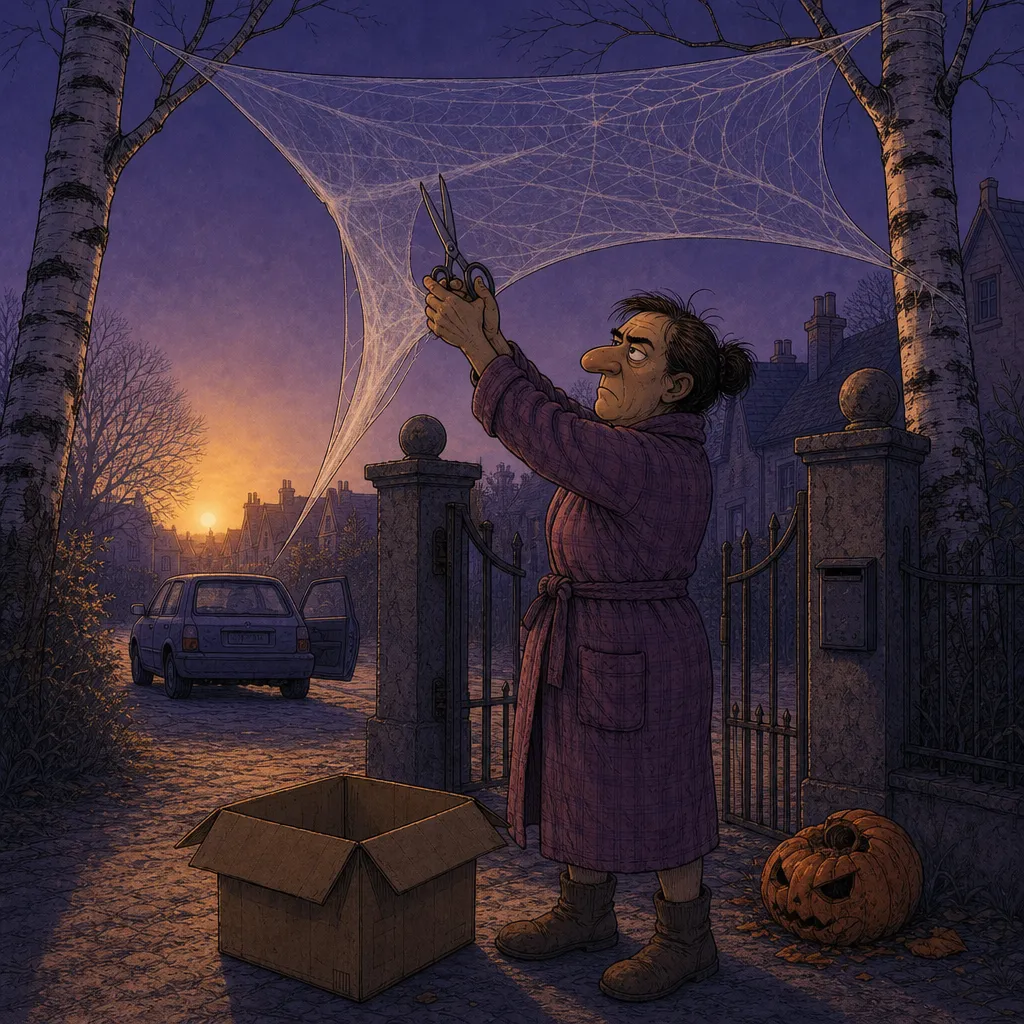
We wrote a collection of original riddles set around 31 October, with fancy dress, trick-or-treating, decorations and neighbours. Each one has a free page on this site that stays up all year. In the app, the collection sits in the library from 17 to 31 October, which is when to prepare your stories.
For an opener, take one of the three one-star stories at the bottom of this page.